
It is crucial to take precautions to prevent frostbite when camping in cold conditions. Your extremities, such as your fingers, toes, nose, and ears, are particularly vulnerable to frostbite, which can cause permanent damage if not properly addressed. However, with the right knowledge and preparation, you can enjoy the great outdoors even in icy temperatures without putting yourself at risk.
One of the most effective ways to prevent frostbite while camping in the cold is to dress in layers and wear proper insulated gear. Additionally, it is important to keep your body and extremities dry as moisture can increase the risk of frostbite. In this blog post, we will discuss several helpful tips and techniques to ensure that you stay safe and warm during your cold-weather camping adventures.
Key Takeaways:
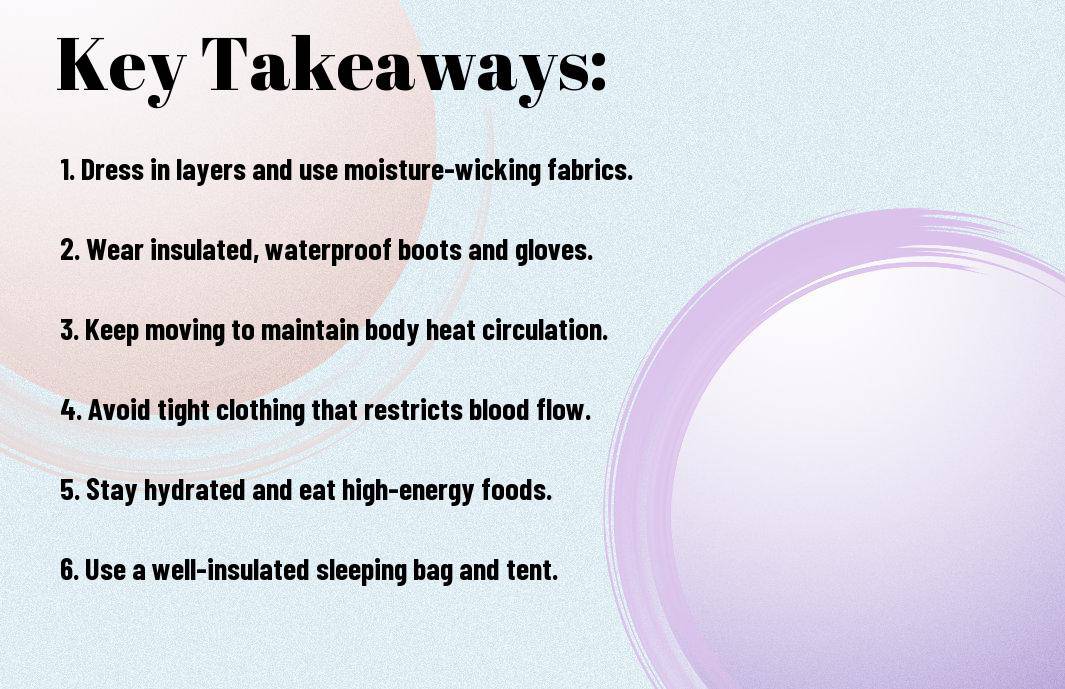
- Proper Clothing: Dress in layers and wear moisture-wicking clothing to stay dry and warm.
- Adequate Shelter: Use a well-insulated tent or build a windbreak to protect yourself from harsh weather conditions.
- Stay Dry: Change out of wet clothing immediately and keep your hands and feet dry to prevent frostbite.
- Adequate Nutrition and Hydration: Consume warm, high-energy foods and stay hydrated to maintain body heat.
- Know the Signs: Be aware of the early symptoms of frostbite, such as numbness and tingling, and seek medical attention if necessary.
Fundamental Principles of Staying Warm
If you’re heading out into the cold for a camping trip, staying warm is of the utmost importance. Understanding the fundamental principles of staying warm will ensure that you are well-prepared to prevent frostbite and other cold-related injuries.
The Science of Body Heat Retention
When camping in the cold, it’s important to understand how your body retains heat. Your body works to maintain a core temperature of around 98.6°F (37°C), and when exposed to cold temperatures, your body adapts to prevent heat loss. One of the key ways your body retains heat is through vasoconstriction, where blood vessels constrict to reduce heat loss. Understanding this process can help you take the necessary precautions to stay warm and prevent frostbite.
Dressing to Prevent Frostbite: Layering Strategies
Proper clothing is essential for staying warm in cold conditions. Layering your clothing is a highly effective strategy for retaining body heat, as it creates air pockets that act as insulation. The base layer should wick moisture away from your skin, the middle layer should provide insulation, and the outer layer should protect against wind and moisture. Choosing the right fabric for each layer, such as moisture-wicking synthetics and insulating wool or fleece, is crucial for staying warm and preventing frostbite.
Choosing the Right Gear
Obviously, the right gear can make a huge difference in preventing frostbite while camping in the cold. Choosing the right equipment and clothing will help keep you safe and comfortable during your outdoor adventure. If you want to read more about it check out How To Avoid Frostbite During Winter Camping?
Essential Features of Winter Camping Gear
When it comes to choosing the right gear for cold weather camping, there are a few essential features you should look for. Insulation is key, so make sure your sleeping bag, clothing, and tent are all designed for cold weather. Look for waterproof and windproof materials to keep you dry and protected from harsh elements. You should also prioritize breathability in your clothing to prevent moisture buildup, which can lead to cold-related injuries.
Footwear: Keeping Your Feet Failsafe Against the Cold
Your feet are especially susceptible to frostbite, so it’s crucial to choose the right footwear for winter camping. Look for insulated boots that are rated for the temperatures you expect to encounter. It’s also important to have moisture-wicking socks to keep your feet dry and comfortable. Proper traction is essential, so consider boots with a good grip to prevent slips and falls on icy terrain.
Setting Up Camp
Your first priority when camping in the cold is to set up your camp in a way that will help prevent frostbite. This involves selecting a campsite that provides thermal advantage and taking the necessary steps to insulate and heat your sleeping area. Here are some important tips to help you stay safe and warm during your cold-weather camping trip.
Selecting a Campsite for Thermal Advantage
When selecting a campsite in cold weather, look for a location that provides protection from the wind and plenty of exposure to sunlight during the day. Avoid low-lying areas where cold air can settle, and try to situate your camp on a slightly elevated, dry spot. If possible, make use of natural features such as trees or boulders to provide additional windbreaks.
Tips for Insulating and Heating Your Sleeping Area
Insulating and heating your sleeping area is crucial for preventing frostbite. Start by placing a ground pad under your sleeping bag to insulate yourself from the cold ground. Additionally, use a quality sleeping bag rated for low temperatures, and consider layering with extra blankets or a sleeping bag liner for added warmth. If you are using a tent, make sure it is properly ventilated to reduce the buildup of condensation, which can make you even colder. Finally, consider using a hot water bottle or hand warmers in your sleeping bag to provide extra warmth during the night.
- Use a ground pad to insulate yourself from the cold ground.
- Choose a quality sleeping bag rated for low temperatures.
After following these tips, you will have a well-insulated and heated sleeping area, which will help provide protection against frostbite while you sleep.
Nutrition and Hydration
Despite the cold temperatures, it’s important to remember that staying well-nourished and hydrated is essential for preventing frostbite while camping. Proper nutrition and hydration help maintain your body’s internal temperature and keep your blood flowing effectively, reducing the risk of frostbite.
Foods and Drinks That Help Maintain Body Heat
When camping in the cold, consuming foods and drinks that help maintain body heat is crucial. Hot drinks such as tea, coffee, or hot chocolate can provide a temporary warmth boost, while high-energy foods like nuts, dried fruits, and granola bars can help keep your internal furnace going. Additionally, consuming foods high in healthy fats, such as avocados and nut butters, can provide a longer-lasting source of energy and help insulate your body from the cold.
Common Misconceptions: What to Avoid Eating and Drinking
It’s important to dispel common misconceptions about staying nourished and hydrated in cold weather. Contrary to popular belief, consuming alcohol does not help keep you warm—instead, it can actually lower your core body temperature, making you more susceptible to frostbite. Similarly, consuming caffeine in large quantities can lead to dehydration, which can increase the risk of frostbite. Make sure to moderate your intake of these substances and focus on consuming warm, nourishing foods and drinks instead.
In conclusion, remember that maintaining proper nutrition and hydration is essential for preventing frostbite while camping in the cold. By choosing the right foods and drinks, you can help your body stay warm and energized, reducing the risk of frostbite. As you prepare for your next cold-weather camping trip, be sure to prioritize your nutrition and hydration to stay safe and comfortable in the great outdoors.
Active Prevention Methods While Camping
Your active participation in preventing frostbite is crucial, especially when camping in the cold. By taking certain measures, you can significantly reduce the risk of frostbite and ensure a safe camping experience. Here are some effective active prevention methods to consider:
Exercises to Boost Circulation in Extreme Cold
Engaging in physical activities such as hiking, jogging in place, or doing jumping jacks will help increase blood circulation and keep your body warm in extreme cold conditions. Regular movement is essential for preventing frostbite, as it helps distribute heat throughout your body and prevents cold spots from forming. Be sure to take frequent breaks to perform these exercises, especially when you start feeling cold or notice numbness in your extremities.
Safe Use of Heat Sources and Chemical Warmers
When camping in the cold, it’s important to use heat sources and chemical warmers safely to prevent frostbite. While building a fire or using portable heaters can provide warmth, it’s crucial to follow safety guidelines to avoid accidents. Always ensure proper ventilation when using heat sources inside enclosed spaces to prevent carbon monoxide poisoning. Additionally, using chemical warmers in your gloves, boots, or pockets can help maintain warmth, but it’s essential to read and follow the instructions for safe use.
By engaging in exercises to boost circulation and using heat sources and chemical warmers safely, you can actively prevent frostbite while camping in the cold. It’s crucial to maintain regular movement and prevent cold spots from forming, as well as follow safety guidelines when using heat sources and chemical warmers. These active prevention methods will significantly reduce the risk of frostbite and ensure a safe and enjoyable camping experience.
Understanding and Responding to Frostbite Symptoms
To ensure your safety while camping in the cold, it is crucial to understand and respond to the symptoms of frostbite. Frostbite occurs when the skin and underlying tissue freeze, often causing damage and even permanent injury. Recognizing the warning signs and knowing how to respond to them can help prevent serious consequences.
Early Detection: Recognizing the Warning Signs
The early symptoms of frostbite may include numbness, tingling, or aching in the affected area. Your skin may also appear red or pale, and feel unusually firm to the touch. If you experience these symptoms, it is important to take action immediately to prevent further damage. It is vital to pay attention to these warning signs and take steps to warm the affected areas as soon as possible.
Emergency Measures: Immediate Steps to Take
If you or someone in your camping party shows symptoms of frostbite, it is essential to take immediate action. Move to a warm, dry area and remove any wet clothing. Gently rewarm the affected area using body heat or warm, not hot, water. Avoid rubbing or massaging the area, as this can cause further damage. If needed, seek medical attention as soon as possible. Remember, quick action is crucial in preventing severe frostbite and permanent injury.
By understanding and responding to frostbite symptoms, you can protect yourself and your camping companions from potential harm. It is important to be aware of the warning signs and to take immediate action if frostbite is suspected. Stay vigilant and be prepared to respond effectively in case of an emergency. Your knowledge and quick thinking could make all the difference in a potentially dangerous situation. Always remember, it is better to be overprepared than to underestimate the risks of camping in the cold.
Conclusion
Taking this into account, it is essential to prioritize your safety when camping in cold conditions. By following the effective ways to prevent frostbite, such as dressing in layers, keeping dry, covering your extremities, and staying hydrated and well-nourished, you can significantly reduce the risk of frostbite. Additionally, being aware of the signs and symptoms of frostbite and seeking medical attention if necessary is crucial in preventing long-term damage to your body. Remember to always be prepared and take the necessary precautions to stay warm and safe while camping in the cold.
FAQ
Q: What are the effective ways to prevent frostbite while camping in the cold?
A: There are several effective ways to prevent frostbite while camping in the cold. Firstly, it is important to dress in layers and wear moisture-wicking clothing to stay dry. Additionally, it is crucial to protect exposed skin by wearing gloves, hats, and scarves. It is also important to stay hydrated and well-nourished to maintain body heat. Lastly, it is essential to avoid prolonged exposure to extreme temperatures and to seek shelter when necessary.
Q: How can I protect my extremities from frostbite while camping in the cold?
A: To protect your extremities from frostbite while camping in the cold, it is important to wear insulated, waterproof boots and thick, moisture-wicking socks. Additionally, it is crucial to wear thermal, insulated gloves or mittens to keep your hands warm and to avoid prolonged exposure to extreme temperatures. It is also important to keep your ears and face covered with a warm hat and scarf to prevent frostbite on these exposed areas.
Q: What should I do if I suspect someone has frostbite while camping in the cold?
A: If you suspect someone has frostbite while camping in the cold, it is important to seek medical attention immediately. While waiting for medical help, it is crucial to move the person to a warm area and remove any wet clothing. It is also important to gently warm the affected areas using warm (not hot) water, avoiding rubbing or massaging the frostbitten areas. It is essential to protect the frostbitten skin from further injury, and to provide warm, non-alcoholic, non-caffeinated beverages to help raise the body temperature.
0 Comments